The Udupi hijab controversy: Choice, faith and politics
February 14, 2022 4 years ago
As Karnataka's hijab controversy draws global attention, we examine its legal, religious and political undercurrents amid the media frenzy.
Earlier this month, protests erupted in Karnataka after school administrators in Udupi barred six female students from class for violating the uniform policy by wearing a hijab. Non-Muslim students counter-protested by wearing saffron scarves to school, breaking the same codes.
Predictably, the dispute snowballed into a raging national and international debate about Islamophobia in India and citizens' fundamental rights. Islamist organizations and the mainstream media fanned the flames, spreading protests across the state. On February 1st, fearing violent escalation, the Karnataka Government enforced Section 144. Schools closed state-wide for three days by order of the district magistrate.
The hijabis accused the college management of denying their right to education; the school maintained its right to bar students who violated its uniform policy. These conflicts between individual, institutional, and societal rights raised vital questions for Indian polity.
The rights of millions of Indian women are at risk, so lawmakers and judiciaries must consider the case carefully. The Shah Bano case showed how missteps in striking down misogynistic practices could delay justice for millions of women by decades.
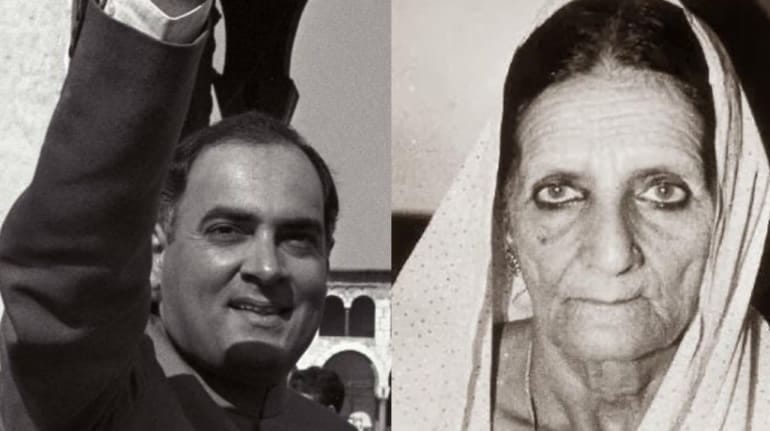
(Right) Shah Bano Begum, a Muslim woman granted alimony after an instant divorce in the landmark 1985 Supreme Court case of Ahmed Khan v. Shah Bano. (Left) Congress chief and Prime Minister Rajiv Gandhi, who overturned the decision to grant her justice.
Although regressive practices like sati and untouchability were outlawed decades ago, Muslim personal law in India tragically remains largely uncodified. In these legal grey zones, Muslim women suffer unimaginable injustices. Nehru's shortsightedness in codifying only Hindu law while ignoring his Muslim compatriots has cost India dearly in the unrealized potential of all her daughters forced into a life behind the paardah.
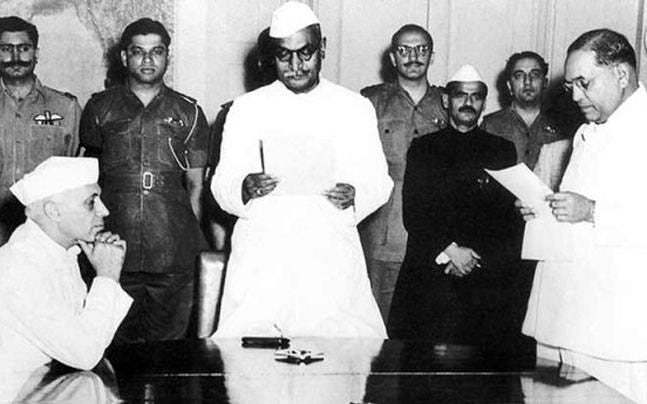
Disagreement between Rajendra Prasad (middle) and Nehru (left) over the Hindu code bills as Dr. B.R. Ambedkar (right) reads. Prasad advocated for a uniform civil code while Nehru backed the idea of separate personal laws for minority communities.
204 million Indians currently live under Sharia law. The All India Muslim Personal Law Board (AIMPLB) governs marriage, divorce, adoption, inheritance, and succession laws for Muslims in India. Congress' identity politics and clerical obscurantism have left practices long abandoned in even the most conservative Muslim societies ossified in Indian personal law.
Despite electoral and social stigmas, the BJP government has pressed ahead with the unenviable task of outlawing misogynistic practices such as triple talaq and nikah halala. The Muslim Women (Protection of Rights on Marriage) Act, 2019, made male-only instant divorce illegal in January. It also provided retroactive relief to women who had undergone the ordeal, giving them the same alimony and custody rights enjoyed by all other Indian women. The so-called fascist and Islamophobic Modi government thus brought relief to millions of married Muslim women who had lived with the looming threat of instant expulsion and abandonment.
In December 2021, the Center followed with the Amendment to the Prohibition of Child Marriage Act of 2006 Bill, which would make the legal age of marriage 21 regardless of sex or religion. The BJP hopes to close a gaping loophole in Muslim personal laws that allows girls to be married “as soon as they attain puberty.” The amendment will prohibit the cruel practice of legally-sanctioned child marriage within Muslim communities. If passed, it will protect the most vulnerable minors from human trafficking and child sexual abuse through practices like nikah halala (temporary marriage). The Amendment of Article 370 also brought millions of women and girls from Muslim majority Kashmir under the equal protection of the Indian Constitution.
These common-sense laws were welcomed by Indians, including the vast majority of Muslims. The usual suspects continued spoiling, claiming these were the first steps by an Islamophobic and misogynistic government to rob Muslims of their identities and subjugate them under the boot of Hindutva majoritarianism. SP leader Akhilesh Yadav went so far as to warn the streets would “flow with rivers of blood” if the BJP dared to interfere further in Muslim affairs.
More than a year has passed since the abrogation of Article 370. Except for a few minor, isolated incidents, Indian Muslims have not turned out to protest against any of these laws. They have embraced them and the many welfare schemes the BJP government has instituted for all Indians regardless of caste or creed. Indians, including Kashmiris, have overwhelmingly rejected the trite notion that hijabs, triple talaq, the Babari Masjid, separatism, or blind opposition to Hinduism are essential to Muslim identity.
Kashmiri girls wave Indian flags and sing “Saare Jahan se Aacha” on India’s 74th Independence Day. The Border Security Force (BSF) stands vigilant at the Line of Control as infiltration attempts by Pakistan reach an all-time high.
Residents of Srinagar dance in celebration with their Mayor Junaid Mattu after hoisting the tricolor at Lal Chowk on India’s 75th Independence Day.
Still, a small minority of privileged urban elites have sought to internationalize, amplify and conflate narratives of the so-called genocide of India's Muslims by the ruling BJP government. The hijab issue is the latest in a string of Congress-manufactured controversies. Understanding the arguments is crucial to creating a compelling counter-narrative at home and abroad, starting with a practical examination of the paardah and school uniforms.
Compared to triple talaq and child marriage, current veiling practices in Muslim societies appear relatively innocuous. Their implications for Muslim women, however, are grave and far-reaching. Restrictive dress codes are undergoing rapid reform across the Muslim world, including in Saudi Arabia, custodian of the holy cities of Mecca and Medina. While Saudi Sharia law never explicitly mandated the abaya and hijab, the religious police brutally enforced them de facto. Since 2019, Crown Prince Mohammed Bin Salman has systematically curtailed the virtually unlimited powers Wahabi hardliners once enjoyed.
Saudi Crown Prince Mohammed Bin Salman discusses equality for women and dress code reform.
Though his tactics have raised many eyebrows, MBS has undoubtedly ushered in progressive reforms for Saudi women. Much to the ire of extremists worldwide, women are no longer required to wear the veil and can now drive and participate in public and even political life. Viral photographs of Saudi women celebrating World Yoga Day in public parks have shown that even the most conservative regimes can reform under the right leadership.
Saudi men and women celebrate World Yoga Day together at a public park in King Abdullah Economic City.
Many in the Indian Twitterati would be shocked to learn that countries including Tajikistan, Azerbaijan, and Tunisia have outright banned hijab in schools and universities to prevent the rise of fundamentalist and anti-social elements. Are all these countries also guilty of Islamophobia? As Muslim nations reject veiling, India's defenders of liberalism justify it in the name of secularism and tolerance.
Alongside these debates over veiling, the political and security factors fueling this controversy cannot be ignored. Reports suggest the six girls at its center are associated with the student arm of the PFI, either directly or through their parents. The Popular Front of India (PFI) became the sanitized successor to the banned terrorist outfit SIMI. Known PFI associates are linked to attacks against politicians and the spread of online propaganda produced by Al Qaeda and the Taliban. The openly anti-Semitic organization is also associated with international terror groups like Hamas and the Muslim Brotherhood.
Those providing cover for veiling practices have performed extraordinary intellectual contortions to provoke young people into demonstrating publicly. Much like masks have polarized North America, the Congress ecosystem is attempting to turn the hijab from a simple scarf into a wearable political symbol.
Personal choice and social pressure
One of the most common defenses of the hijab rests on personal choice: women choose to wear it for themselves. Its simplicity makes it potent, and its capacity to silence opponents cannot be overstated, especially when hijabi women put it to non-Muslims or men. Yet even light scrutiny exposes it as a distraction from the current issue: whether all uniforms must accommodate the hijab.
India is a fiercely democratic society founded on panth nirpekshta (religious non-alignment). This ancient and uniquely Bharatiya principle is at the heart of the Constitution of India. Unlike the American Bill of Rights, where rights emanate from some divine fountainhead, the Indian Constitution's rights were given by the people to themselves. Our rights have nothing to do with any particular conception of God. All Indian citizens are free to wear any attire subject to moral and public decency. Unlike French laïcité, panth nirpekshta seeks to integrate religion harmoniously into the public sphere rather than eliminate it, without favoring or prejudicing any sect or philosophy. This freedom protects those who wear religious dress and symbols and those who don't.
A section of the Indian media has weaponized language to suggest that Muslim women face a country-wide hijab ban, much like those in France, China, and Switzerland. This is blatantly false and irresponsible. Even if a school prohibits hijabs in class, India has thousands of institutions, big and small, private and public, secular and religious, each free to set its uniforms and curriculums. Whether motivated by ignorance or malign intent, this hyperbole distracts from the issue and, more seriously, mobilizes well-meaning but misguided students to demonstrate for or against the hijab.
For the vast majority of Indians watching on TV, it is painfully evident that banning the hijab, or any other clothing, say a bikini, is virtually impossible in their country. International audiences, however, are easily misled into believing that 200 million Muslims are in mortal danger under a genocidal Hindutva dictatorship. This distortion serves extremist and hyper-partisan forces seeking political and financial support abroad while reaffirming residual colonial caricatures of brown, Hindustani savages.
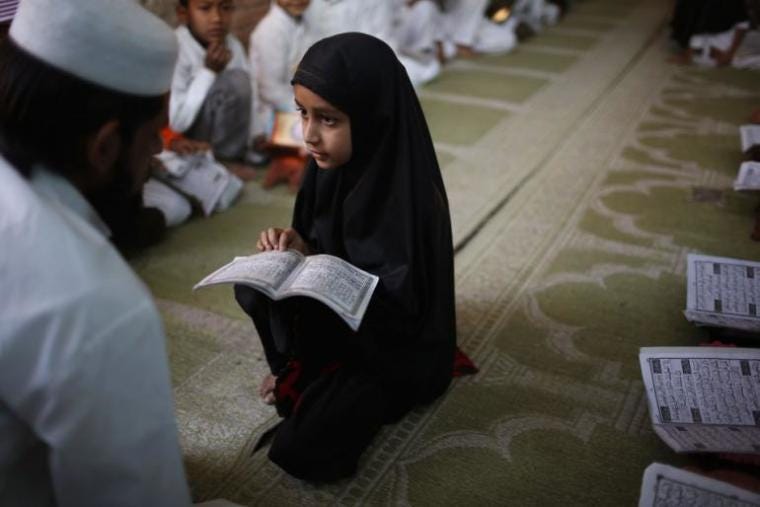
A girl studies at a Madrassa in the Indian city of Ahmedabad.
Nevertheless, as a society we must consider at what age Muslim girls can independently decide whether to wear the hijab. A nine-year-old cannot independently consent to it. For the silent majority of veiled women, family and social pressure makes the hijab inevitable from as young as 10 or 12, as they attain puberty. Much like foot binding in China or the neck-rings worn by the Kayan Lawhi tribe in Thailand, cultural norms influence women's compliance far more than any conscious desire to preserve or enhance beauty, safety and modesty.
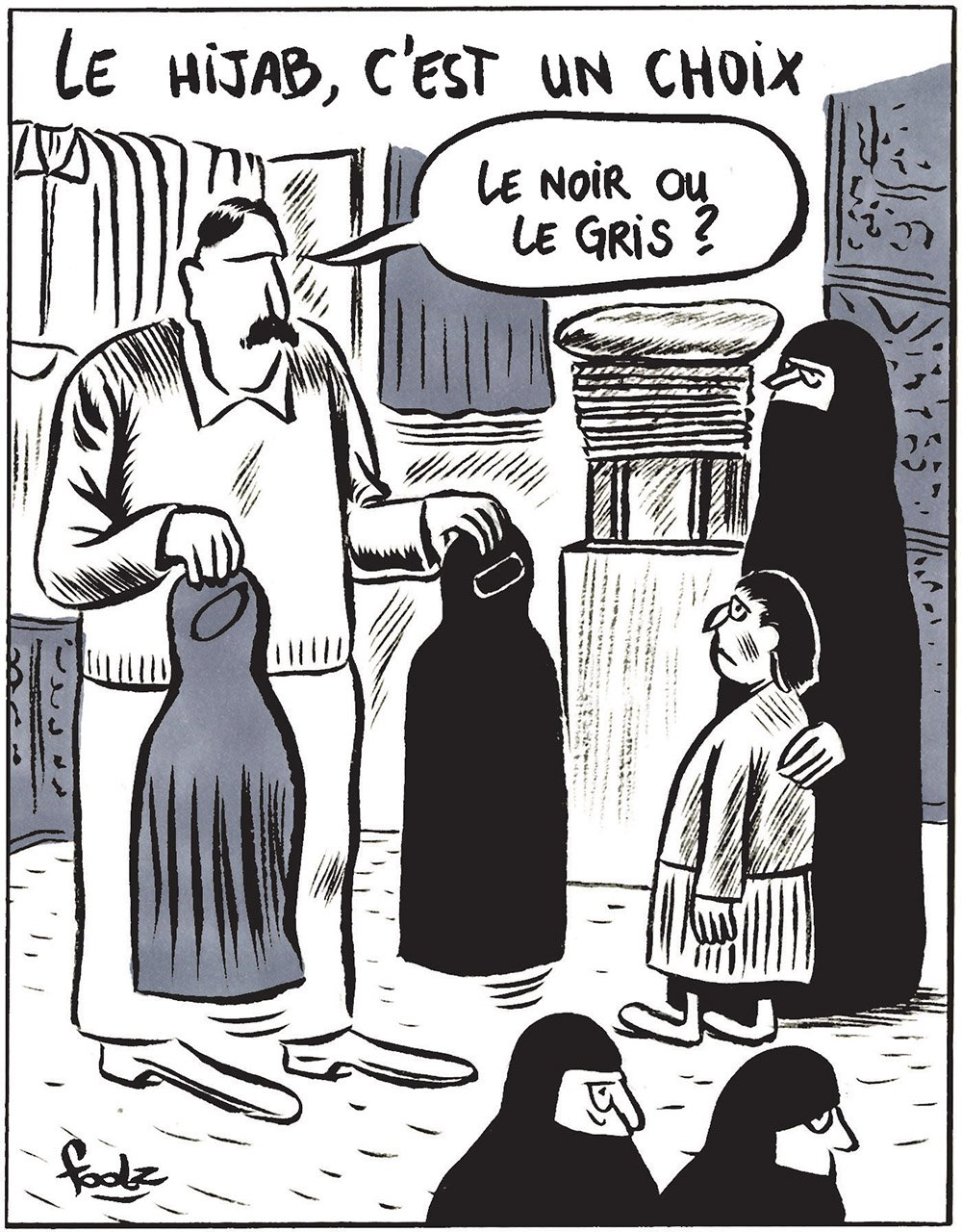
“The Hijab — a choice! Black or Grey?” Cartoon by Charlie Hebdo.
The consequences of refusing the veil also bear on this question of choice. In oft-ignored protests, women have suffered life-altering penalties for defying the hijab. Nazanin Zaghari-Ratcliffe, accused of “plotting to topple the Iranian government” by taking off her hijab in protest, is currently serving a five-year sentence in an Iranian prison. Vida Movahedi was arrested in October after removing her hijab and sentenced to a year in jail.
Women in Iran take protest selfies, starting a viral campaign against mandatory hijab. Recently, 1st February was declared “World Hijab Day” — the same day Ruhollah Khomeni returned to Iran and constituted it into an Islamic theocracy.
Closer to home, Kashmiri student Aroosa Parvaiz, who recently ranked highest in the Class 12 exams, was viciously trolled on social media for not wearing the hijab. These are a few of the countless brave women who have risked life and limb to protest mandatory veils.
Kashmiri topper Aroosa Parvaiz delivers a stunning response to the trolling she encountered after appearing on TV without a hijab.
Against this backdrop, the hypocrisy of those defending the hijab on grounds of personal choice cannot be understated. Pakistani Activist Malala Yousafzai, who was shot in the head for daring to attend school in her own country, wrote in her book:
“Living under wraps seemed so unfair — and uncomfortable….no matter what other girls did, I would never cover my face like that. My face was my identity.”
Yet her quickness to wade into the Karnataka row without understanding the ground realities calls into question her commitment to freeing girls from the veil.
The march of progress is inevitable. History and future Muslims will not be kind to liberals who spread such misinformation for political or commercial gain. Ironically, the same activist who advocates for women, gay rights, and similar causes regularly becomes activated, like a Manchurian candidate, into defending the veil. Consumed by political ideology, these individuals overlook the thousands of Muslim girls in Karnataka who couldn't care less about the hijab and are stuck at home wondering why they are missing school.
पर्दे के पीछे क्या है / What’s behind the veil?
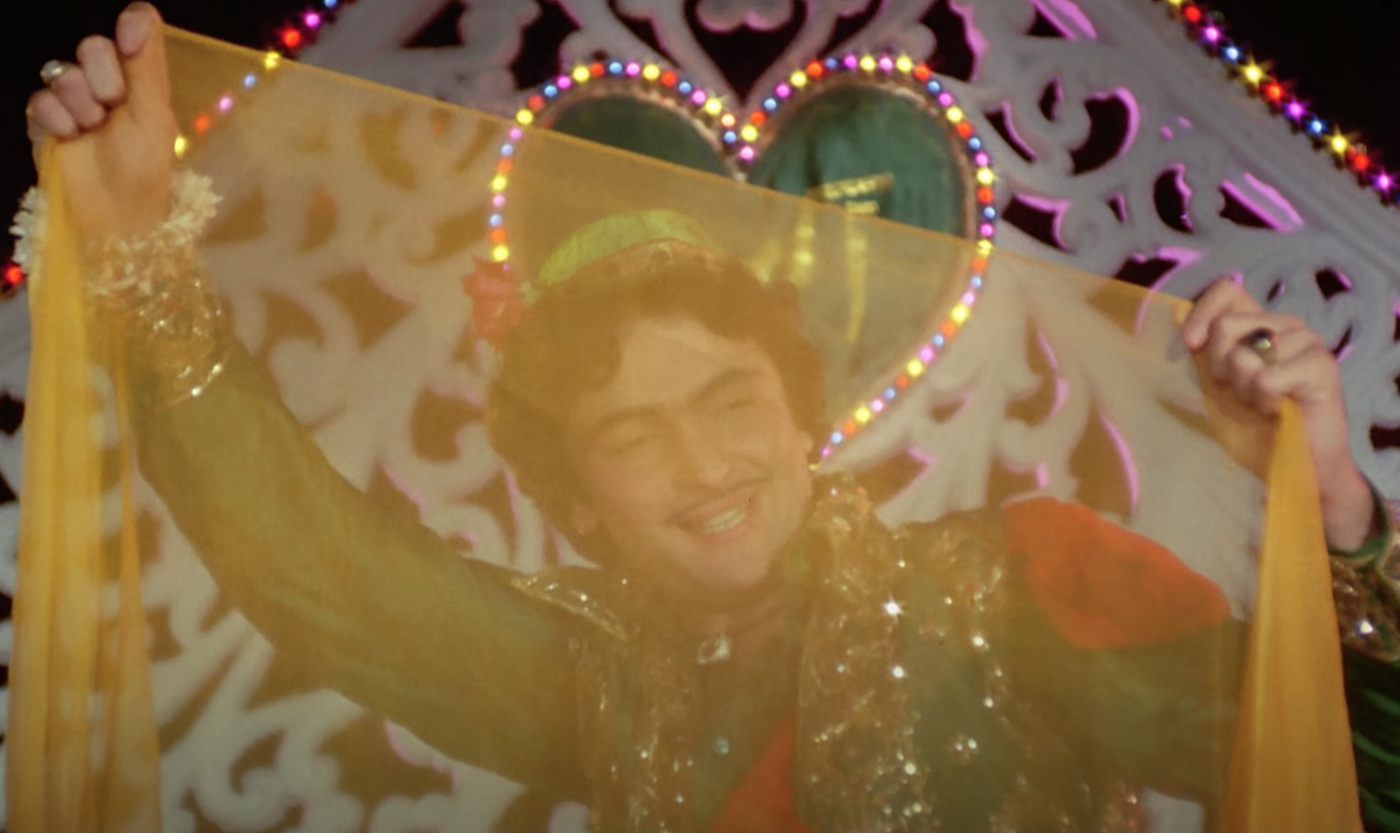
A shot from the 1977 film “Amar Akbar Anthony”, considered by many a magnum opus promoting moderation, religious pluralism and secular nationalism. Rishi Kapoor's character, Akbar, serenades his love with a Qawaali, urging her to remove her veil to make the world more beautiful.
Beyond personal choice, the fundamental debate is whether the hijab is an essential Islamic practice and, if so, whether a government-funded school can remove it from its uniform policy.
The Quran mentions “hijab” seven times, never in reference to specific articles of women's clothing. It extols modesty for both sexes and urges them to wear modest, culturally appropriate clothing that covers private parts.
The Quran gives general guidelines on why and how the hijab should be observed. Hadith literature is far more prescriptive about the circumstances behind the revelation of its requirements and what they entail. Their reasoning differs. The Hadith suggests the hijab conceals women's identities, in particular Sawdah bint Zam'ah, one of Muhammad's wives. His close companion Umar was harassing her while she relieved herself outdoors at night. The Quran's account, however, suggests that the hijab hides women's beauty to prevent sexual assault.
Both accounts have generally been accepted, with attempts to reconcile them, but their rationales have recently proven problematic. Objections to the Quranic account concern its suggestion that women's attire makes them partly responsible for their harassment. Research shows adherence to veiling is positively correlated with the risk of violence against women. The Hadith account is problematic because it portrays Umar, a highly revered religious figure and friend of Muhammad's, as unsavory. It also suggests Muhammad was not solely responsible for formulating Sharia, which is supposed to be divinely revealed and unchanging.
Other Hadiths question veiling through the account of Aisha bint Talah, the Prophet's adopted daughter. A renowned beauty married to the governor of a large town, Aisha refused her husband's request to cover her face. She claimed her beauty was a gift from Allah that others should see as a testament to His greatness and the beauty of all creation. Here, a member of the Prophet's family and one of the earliest Muslims rejected the hijab and niqab outright. Some conservative jurists question this Hadith's provenance, but many others are beginning to accept it more openly, given its proximity to the Prophet in time and space and its multiple corroborating narrators.
Award-winning author and commentator Samina Ali discusses the origins and resurgence of the hijab along with various countries’ enforcement of the practice.
The comparison with Sikh turbans
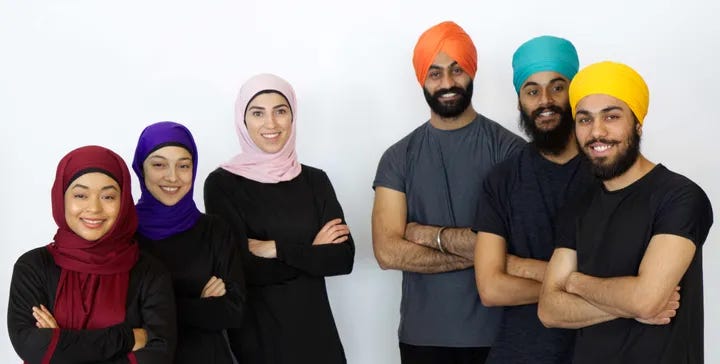
Models pose in hijabs and pagdis. Thawrih, an Ottowa-based startup, specializes in activewear for Sikh and Muslim athletes.
Supporters of the hijab often cite the Sikh turban to justify similar accommodations for the veil. Yet the only thing the Muslim hijab and Sikh pagdi really share is that both are cloth. Assessing this comparison requires understanding the essential practices of Sikhism and Islam.
One of Sikhism's five core tenets, kesh, requires Sikhs to keep their hair uncut in recognition of the perfection of God's creation. The hair must be neatly combed, neither matted nor dreadlocked. Only kesh (uncut hair) is essential; the pagdi (cloth turban) wraps it. Uniforms around the world make exceptions for the pagdi because it offers clear, practical benefits in managing long hair. The hijab's benefits, however, are entirely subjective: it offers no clear enhancement to women's modesty, certainly in the modern Indian context.
A quick Google search for the “essential practices of Islam” reveals five: shahada (declaration of faith), salat (prayer), zaakat (charity), saawaam (fasting) and hajj (pilgrimage). The hijab is absent. Even the virtues of modesty and chastity underlying veiling are recommendations for individuals to apply within their own lives and times, rather than essential practices or requirements enshrined within Shariyat.
Even if the hijab is an essential Islamic practice, Article 25-1 permits the State to restrict its use on grounds of morality, health and public order. Carrying a kirpan (short dagger), for example, is another essential Sikh practice, reminding adherents of their commitment to defending innocents against injustice. Yet even ceremonial, blunted kirpans are prohibited in public places for safety reasons.
It is hard to imagine Sikh boys protesting outside schools to demand permission to carry sharpened daggers on school grounds. Harder still is picturing Sikh Granthis expelling young Sikhs or punishing them with imprisonment for keeping trim hair.
For these reasons, most Indians do not take these comparisons very seriously. As followers of India's second-largest religion, Muslims have always been targets of the divisive identity politics that has plagued the nation since before independence. The fissures go back to the 1947 partition under the two-nation theory, which declared the subcontinent's Hindus and Muslims distinct nations unable to coexist in one state.
Pakistan's national mythos holds that a Muslim minority in India would inevitably be subjugated by the Hindu majority. Maintaining this myth is crucial to Pakistan's military establishment. Yet even Indian Muslims demonstrating for the hijab reject propaganda from across the border. They show that they feel at home as Hindustanis and can defend their rights within the available Constitutional framework.
Dr. Zeenat Shaukat Ali is the director general of The World Institute of Islamic Studies for Dialogue, Organization of Mediation and Gender Justice (Wisdom Foundation).
Sitting MP and Supreme Court lawyer Asaduddin Owaisi delivers a scathing and hilarious reply to Pakistani propaganda at a rally in Uttar Pradesh.
Over 100 Lok Sabha seats are up for grabs, 80 in Uttar Pradesh alone. The Samajwadi Party (SP) and Congress have much to lose and are fighting dirtier than ever to stoke anti-incumbency. They know the drastic drop in crime, especially against women, brought on by UP's bhagwa-clad Chief Minister Yogi Adityanath would undoubtedly encourage pro-BJP sentiment even in Muslim constituencies.
Muslim Citizens of Gorakhpur laud the efficacy and fairness of the allegedly Islamophobic, Hindutvawadi Yogi Adityanath government (Hindi).
Much to Congress and SP's dismay, simple arithmetic shows the Muslim vote is no longer a monolith in India's most populous state. Muslims still generally follow the Islamic clergy on faith but increasingly make political decisions independently. In 2019, the Muslim vote fractured between BSP and SP, with the BJP capturing a growing minority of the vote among women, Shia, and college-educated Muslims. It was also the first year in India's history when more women voted than men, and they voted more independently of men than ever before.
Perhaps the most widely felt change in the Modi era is the drastic reduction in open defecation. After seven years of the Swaach Bharat Abhiyaan (Clean India Campaign), India has defied gravity to achieve 100% toilet coverage for rural households. Millions of women across UP no longer endure the dangerous and shameful ordeal of open defecation.
A Swachh Bharat ad with superstar Amitabh Bachan. In it, he urges men to install government-sponsored toilets in their homes for their families.
The United Nations features Hyderabad-based entrepreneur Namita Banka. Women-led startups are pioneering the design and production of cost-effective and eco-friendly toilets.
In many ways, UP's rural Muslim women understand the plight of the Prophet's wife Sawdah bint Zam'ah more intimately than anyone else could. Time will tell who gets these women's votes, but I am incredibly proud that we have reached this moment. Men and women are openly hashing out social and religious taboos. I am especially hopeful because the strongest voices against veils now come from Indian Muslims, especially women, who are empowered, articulate, and unwilling to take anything from the Maulana-Maulvi lobby lying down. Though I may disagree with them, I am equally proud of my Muslim brothers and sisters who argue eloquently for the hijab with facts and reason instead of propaganda and partisanship. This unity in diversity characterizes Indian democracy. We clearly agree more than we disagree. Suddenly, the dream of a uniform civil code doesn't seem so crazy anymore.
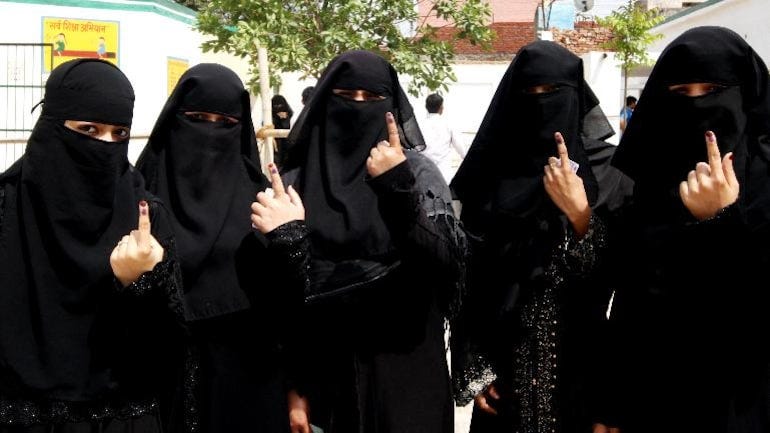
Indian women show inked fingers after exercising their rights to vote and wear the burkha simultaneously. Muslims make up 20% of Uttar Pradesh's population and are voting in a seven-phase election that will impact the 2024 Prime Ministerial race.
Actress Sara Khan has some fun with Rakhi Sawant while telling reporters just what she thinks about the paarda. She later apologized after being trolled on social media.